

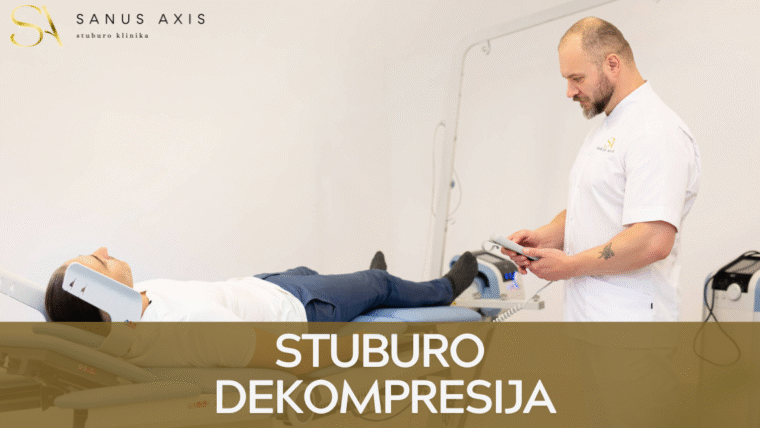
The private clinic Sanus Axis provides modern spinal decompression therapy for patients suffering from back, neck, or limb pain.
The procedure is performed using the advanced Manuthera decompression table, which allows precise control of the direction, intensity, and duration of spinal traction according to the patient’s individual condition.
Spinal decompression therapy reduces pressure on the intervertebral discs, relieves compressed nerves, and improves blood circulation in the surrounding tissues.
Each patient receives an individualized treatment plan based on biomechanical assessment and clinical diagnostics.
Why Patients Choose Spinal Decompression Therapy at Sanus Axis:
- Procedures are performed by qualified manual therapy and physiotherapy specialists;
- The clinic uses Swiss-made Manuthera decompression equipment, known for its precision and maximum safety;
- The therapy is non-invasive, painless, and an effective alternative to surgery;
- After just a few sessions, patients often experience reduced pain, improved spinal mobility, and better posture.
What Is Spinal Decompression?
Spinal decompression is a non-invasive therapeutic procedure in which the spine is gently stretched to increase the space between vertebrae, reducing pressure on the intervertebral discs and nerves
The therapy helps restore spinal biomechanical balance, reduce tissue tension, and improve the nourishment of neural structures.
How Does Spinal Decompression Therapy Work?
Spinal decompression therapy works on the principle of natural regeneration.
Controlled traction creates pressure changes within the intervertebral discs, reducing mechanical stress on them and creating conditions that allow the disc nucleus to return to its anatomical position.
Negative pressure improves the movement of fluids, oxygen, and nutrients into the disc tissues, promoting tissue recovery. As pressure on the nerve roots decreases, pain, numbness, and muscle weakness are reduced.
During therapy, the spinal segments move in a physiologically correct manner, allowing the muscles to gradually relax while the ligaments and joints become more flexible.
This biomechanical correction restores spinal alignment and helps maintain long-term results without surgical intervention.
Indications for Spinal Decompression. When Is This Procedure Recommended?
- Intervertebral disc herniation (herniated disc)– reduces pressure from the disc on the nerves, relieving pain and sensory disturbances.
- Disc protrusion – helps return the protruding disc to a more normal position and relieves compression of surrounding structures.
- Spinal stenosis – increases the space within the spinal canal and reduces pressure on the nerve roots.
- Radiculopathy – reduces pain, numbness, or weakness in the limbs caused by compressed nerves.
- Spondylosis and osteochondrosis – helps reduce chronic pain and improve spinal mobility in degenerative conditions.
- Chronic neck or back pain – recommended only after evaluation of the pain source when symptoms are related to stress on spinal structures.
- Postoperative rehabilitation – performed only with physician approval. Helps restore spinal function after surgical treatment.
Procedure Process and Duration
Spinal decompression therapy is performed while the patient lies on a specialized decompression table designed to maintain proper body alignment and allow complete muscle relaxation. The patient is secured with anatomically adjusted straps to ensure that traction force is distributed evenly across the treated area — the lumbar, thoracic, or cervical spine.
During the procedure, the equipment automatically controls the traction force, direction, and cycles, ensuring that the stretching is precise, controlled, and rhythmic. Traction phases alternate with relaxation periods, allowing the discs and neural structures to recover.
A single session typically lasts 20–30 minutes. A treatment course usually consists of 5–10 sessions performed several times per week.
After each procedure, the spine becomes more flexible, back or neck pain decreases, and both posture and range of motion improve.
Benefits of Spinal Decompression
Pain Relief
Spinal decompression therapy directly targets the underlying cause of back and neck pain — mechanical pressure on the intervertebral discs and nerve roots. As this pressure decreases, nerve irritation is reduced, helping relieve pain signals and inflammatory responses.
The procedure also relaxes the deeper muscle layers, reducing tension and spasms that often contribute to chronic pain.
Improved Flexibility and Mobility
During decompression, the normal spacing between vertebrae is restored, allowing spinal segments to move more freely. As stiffness in the joints and surrounding tissues decreases, spinal flexibility and range of motion improve.
Regular therapy enhances overall body biomechanics, makes everyday movements easier, and reduces the risk of future injuries.
Posture Correction
Poor posture often develops due to spinal imbalance and muscle tension. Decompression therapy helps restore the spine’s natural alignment and reduce compensatory postural changes.
As spinal structures return to their natural position, the muscles begin functioning more symmetrically, gradually improving posture and restoring proper body alignment.
Prevention and Long-Term Protection
The therapy not only relieves existing symptoms but also helps prevent future spinal problems. By restoring nourishment and elasticity to the intervertebral discs, the spine becomes more resistant to everyday physical stress.
Regular decompression therapy supports long-term spinal health, slows the progression of degenerative changes, and may help reduce the need for surgical treatment in the future.
Contraindications. When Is the Procedure Not Recommended?
- Spinal injuries – the procedure is not suitable in cases of vertebral fractures, ligament tears, or spinal instability after trauma, as traction may further damage the tissues.
- Spinal or spinal cord tumors – in the presence of benign or malignant tumors in the spinal region, traction therapy may worsen the condition and intensify pain.
- Advanced osteoporosis – due to reduced bone density, even minor mechanical stress may cause vertebral microfractures, therefore decompression therapy is not recommended for these patients.
- Pregnancy – the procedure is not suitable for pregnant women, especially during the later stages of pregnancy, due to altered spinal biomechanics and to avoid additional stress on the fetus.
- Postoperative conditions – after spinal surgery involving implants or vertebral fixation, decompression therapy may only be performed with physician approval and after evaluation of the healing process.
- Acute inflammation or infections – the procedure is not performed in the presence of active inflammatory conditions such as osteomyelitis or rheumatoid arthritis flare-ups until the inflammation has been properly managed.
Suitability for spinal decompression therapy is always assessed by a physician or physiotherapist based on the patient’s condition, diagnosis, and potential risks.
When Should You Consult a Specialist?
It is advisable to consult a spine specialist if you experience back, neck, or limb pain that does not improve within a few days and begins to limit movement or daily activities.
Early evaluation helps identify the problem before it progresses and may help avoid surgical treatment.
You should seek medical attention if you experience any of the following symptoms:
- Pain radiating from the spine into the legs or arms, accompanied by numbness or tingling sensations;
- Muscle weakness, impaired balance, or difficulty standing or walking for extended periods
- Pain that worsens while sitting, standing, or bending and does not improve even after rest;
- Stiffness in the lower back or neck, especially in the morning or after prolonged sitting;
- Problems with urination or bowel function — this may indicate serious nerve compression requiring urgent medical attention;
- Pain that persists for more than 1–2 weeks despite self-treatment measures such as massage, topical creams, or medication.
Seeking professional care early can help prevent pain progression and restore full spinal function
Frequently Asked Questions (F.A.Q.)
Is spinal decompression therapy painful?
No, the procedure is completely painless.
The traction is performed gently and in a controlled manner, so patients typically feel only mild stretching or a pleasant sense of relaxation.
How many sessions are needed before I notice improvement?
Most patients notice relief after 2–3 sessions, although a full treatment course usually consists of 5–10 procedures.
The duration of results depends on the nature of the condition and adherence to the physician’s recommendations.
Is decompression therapy suitable after spinal surgery?
Yes, but only with physician approval.
The procedure may be used during the rehabilitation phase once the tissues have healed and spinal mobility and muscle balance need to be restored.
How is spinal decompression different from regular stretching or massage?
Decompression therapy is performed using a computerized table that precisely controls the direction and intensity of traction.
This allows the therapy to target deeper tissues and reduce pressure on the intervertebral discs in ways that regular stretching or massage cannot achieve.
Is the procedure suitable for all age groups?
The therapy may be suitable for both younger and older patients provided there are no medical contraindications. A comprehensive evaluation is always performed before treatment begins.