

Neck and Shoulder Pain Treatment at Sanus Axis Clinic in Vilnius
The private clinic Sanus Axis specializes in the treatment of neck and shoulder pain. The primary treatment method used is cervical decompression therapy performed with the advanced Manuthera decompression table.
The device allows precise control of the direction, intensity, and duration of traction according to the patient’s individual condition.
Cervical decompression therapy reduces pressure on the intervertebral discs of the cervical spine, relieves compressed nerves, and improves blood circulation in the tissues. When necessary, it is combined with manual therapy, BTL laser therapy, and physiotherapy.
Each patient receives an individualized treatment plan based on biomechanical assessment and clinical diagnostics.
Cervical decompression procedures are performed by qualified manual therapy and physiotherapy specialists;
- Neck decompression procedures are performed by qualified manual therapy and physiotherapy specialists;
- The Swiss-made Manuthera decompression table ensures precise and safe cervical traction;
- Cervical decompression is a non-invasive and painless alternative to surgical treatment;
- After just a few sessions, patients often experience reduced pain and improved neck mobility.
Causes of Pain. What Causes Neck and Shoulder Pain?
- Poor posture and prolonged sitting. When working at a computer, the neck often shifts forward, increasing strain on the discs and muscles of the cervical spine. Over time, this leads to muscle imbalance, joint degeneration, and chronic pain.
- Degenerative spinal changes. With aging, intervertebral discs lose elasticity and fluid content, reducing the space between vertebrae. As a result, osteophytes may form, nerve passageways narrow, and chronic neck pain or nerve irritation can develop.
- Intervertebral disc herniation or protrusion. The soft inner part of the disc protrudes and compresses a nerve root, causing pain that radiates from the neck into the shoulder, arm, or fingers.
- Muscle tension and stress. Emotional stress causes involuntary contraction of the neck and shoulder muscles. Over time, this can develop into chronic pain and restricted neck mobility.
- Trauma. Impacts, falls, or sudden head movements may damage ligaments, discs, or joints — even minor trauma can become the starting point of chronic pain.
Symptoms Indicating the Need for Professional Neck or Shoulder Pain Treatment
Pain Radiating Into the Arm
Neck or shoulder pain that travels through the shoulder into the arm, elbow, or fingers may indicate irritation of a nerve root.
If the pain is accompanied by numbness, tingling, or a burning sensation, it is a sign that the nerve structures are under pressure and the condition may progress.
Weakness in the Arm Muscles
Difficulty lifting the arm, holding objects, or performing fine finger movements may indicate that nerve damage is already affecting muscle function.
Muscle weakness is a more serious symptom than pain, as delayed treatment may lead to irreversible changes.
Neck Stiffness Lasting More Than a Few Days
Temporary neck stiffness after physical exertion is normal.
However, if stiffness and restricted mobility persist for more than a few days or recur regularly, this may indicate structural changes in the cervical spine that require professional evaluation.
Headaches Associated With Neck Tension
Headaches that begin in the back of the head and radiate toward the top of the head or temples are often caused by cervical spine disorders.
If accompanied by neck tension and worsening pain after prolonged sitting, the cause is most likely related to the spine.
Pain Persisting for More Than Two Weeks
Neck or shoulder pain lasting longer than two weeks despite rest, massage, or medication suggests that self-treatment measures are not resolving the problem and professional medical evaluation is necessary.
How Is Neck and Shoulder Pain Diagnosed at Sanus Axis Clinic?
The clinic evaluates both imaging and functional data to identify the true cause of the pain rather than just its consequences.
The Diagnostic Process Includes:
- Biomechanical spinal assessment — analysis of posture, muscle balance, and movement patterns to identify areas of overload in the cervical spine and compensatory movement patterns.
- Neurological testing — evaluation of muscle strength, reflexes, and sensation. These tests help determine whether the pain is muscular or neurological in origin and identify the affected level of the cervical spine.
- MRI and X-ray imaging — to precisely identify the location of a disc herniation, the extent of nerve compression, and the degree of degenerative changes.
- Consultation with a physiotherapist — an individualized treatment plan is developed based on the diagnostic findings.
Methods of Neck and Shoulder Pain Treatment
At Sanus Axis Clinic, neck and shoulder pain is treated using a comprehensive approach — treatment methods are selected according to the underlying cause of pain rather than symptoms alone.
Each patient receives an individualized treatment plan following biomechanical assessment.
Cervical decompression
The clinic’s primary treatment method is cervical decompression using the Swiss-made Manuthera table.
The procedure reduces pressure on the intervertebral discs and nerve roots, improves tissue circulation, and promotes disc regeneration.
It is recommended for conditions such as disc herniation, disc protrusion, spinal stenosis, and radiculopathy
Manual Therapy
The specialist mobilizes the cervical spine segments, relaxes tense muscles, and restores proper joint biomechanics.
This helps reduce pain, improve neck mobility, and correct compensatory postural changes.
BTL High-Intensity Laser Therapy
The laser acts directly on the affected area — reducing inflammation, decreasing nerve ending sensitivity, and stimulating tissue regeneration.
It is effective for chronic neck pain, muscle spasms, and nerve irritation.
Physiotherapy
An individualized exercise program strengthens the stabilizing muscles of the neck and shoulder girdle, restores proper posture, and reduces the risk of recurring pain.
This is the foundation of long-term results — without muscle strengthening, other treatment methods provide only temporary relief.
What Is Cervical Decompression?
Cervical decompression is a non-invasive therapeutic procedure in which the cervical spine is gently stretched to increase the space between the vertebrae, reducing pressure on the intervertebral discs and nerves.
The therapy helps restore biomechanical balance in the cervical spine, reduce tissue tension, and improve the nourishment of neural structures.
How Does Cervical Decompression Work?
Cervical decompression works on the principle of natural regeneration.
Controlled traction creates pressure changes within the intervertebral discs of the cervical spine, reducing mechanical stress on the discs and creating conditions that allow the disc nucleus to return to its anatomical position.
Negative pressure improves the movement of fluids, oxygen, and nutrients into the disc tissues, promoting tissue recovery. As pressure on the nerve roots decreases, neck pain, arm numbness, and muscle weakness are reduced.
During therapy, the cervical spine segments move in a physiologically correct manner, allowing the muscles to gradually relax while the ligaments and joints become more flexible.
This biomechanical correction restores the balance of the cervical spine axis and helps maintain long-term results without surgical intervention.
Indications for Cervical Decompression. When Can This Procedure Help?
- Intervertebral disc herniation in the cervical spine – reduces pressure from the disc on the nerves, relieving pain and sensory disturbances.
- Disc protrusion in the cervical spine – helps return the protruding disc to a more normal position and relieves compression of surrounding structures.
- Cervical spinal stenosis – increases the space within the spinal canal and reduces pressure on the nerve roots.
- Radiculopathy – reduces neck pain, arm numbness, and muscle weakness caused by compressed nerves.
- Cervical spondylosis and osteochondrosis – helps reduce chronic pain and improve neck mobility in degenerative conditions.
- Chronic neck pain – recommended only after evaluation of the pain source when symptoms are related to stress on cervical spine structures.
- Postoperative rehabilitation – performed only with physician approval. Helps restore cervical spine function after surgical treatment.
Procedure Process and Duration
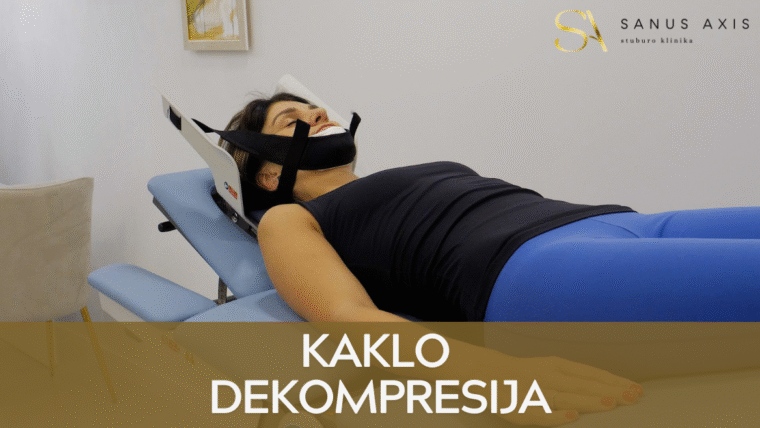
Cervical decompression therapy is performed while the patient lies on a specialized decompression table designed to maintain proper body alignment and allow complete relaxation of the neck muscles. The patient’s body is stabilized with anatomically adjusted straps to ensure that traction force is distributed evenly across the cervical spine.
During the procedure, the equipment automatically controls the traction force, direction, and cycles, ensuring that the stretching is precise, controlled, and rhythmic. Traction phases alternate with relaxation periods, allowing the discs and neural structures to relax and recover.
A single session typically lasts 20–30 minutes. A treatment course usually consists of 5–10 sessions performed several times per week.
After each procedure, the cervical spine segments become more flexible, neck pain decreases, and neck range of motion improves.
Benefits of Cervical Decompression
Pain Relief
Cervical decompression directly targets the underlying cause of neck pain — mechanical pressure on the intervertebral discs and nerve roots. As this pressure decreases, nerve irritation is reduced, helping relieve pain signals and inflammatory responses.
The procedure also relaxes the deeper layers of the neck muscles, reducing muscle tension and spasms that contribute to chronic pain.
Improved Flexibility and Mobility
During decompression, the normal spacing between the cervical vertebrae is restored, allowing cervical spine segments to move more freely. As stiffness in the joints and surrounding tissues decreases, neck flexibility and range of motion improve.
Regular therapy improves cervical spine biomechanics, makes everyday head movements easier, and reduces the risk of future injuries.
Posture Correction
Poor posture often develops due to spinal imbalance and muscle tension. Decompression therapy helps restore the natural alignment of the cervical spine and reduce compensatory postural changes.
As the spinal structures return to their natural position, the muscles begin functioning more symmetrically, allowing posture to gradually stabilize.
Prevention and Long-Term Protection
The therapy not only relieves existing symptoms but also helps prevent future neck problems. By restoring nourishment and elasticity to the intervertebral discs, the cervical spine becomes more resistant to everyday physical stress.
Regular cervical decompression therapy supports long-term cervical spine health, slows the progression of degenerative changes, and may help reduce the need for surgical treatment in the future.
Contraindications. When Is the Procedure Not Recommended?
- Cervical spine injuries – the procedure is not suitable in cases of vertebral fractures, ligament tears, or spinal instability after trauma, as traction may further damage the tissues.
- Spinal or spinal cord tumors – in cases of benign or malignant tumors in the cervical spine, traction therapy may worsen the condition and intensify pain.
- Advanced osteoporosis – due to reduced bone density, even minor mechanical stress may cause vertebral microfractures, therefore decompression therapy is not recommended for these patients.
- Pregnancy – the procedure is not suitable for pregnant women, especially during the later stages of pregnancy, due to altered spinal biomechanics and to avoid additional stress on the fetus.
- Postoperative conditions – after cervical spine surgery involving implants or vertebral fixation, decompression therapy may only be performed with physician approval and after evaluation of the healing process.
- Acute inflammation or infections – the procedure is not performed in the presence of active inflammatory conditions such as osteomyelitis or rheumatoid arthritis flare-ups until the inflammation has been properly managed.
Suitability for therapy is always assessed by a physician or physiotherapist based on the patient’s health condition and potential risks.
Prevention. How to Prevent Neck and Shoulder Pain?
| Preventive Measure | Recommendation |
|---|---|
| Workplace ergonomics | The monitor should be at eye level, the chair should provide proper back support, and the feet should rest firmly on the floor. Poor workstation setup places significant strain on the cervical spine and shoulder girdle throughout the day — even small ergonomic adjustments can greatly reduce muscle tension. |
| Breaks every 45–60 minutes | Prolonged sitting in one position causes muscle fatigue and impairs circulation in the cervical spine. Short breaks involving neck and shoulder movements help prevent the buildup of tension. |
| Muscle strengthening | Weak deep neck muscles are unable to properly support the spine, leading to increased stress on the discs and joints. A regular exercise program designed by a physiotherapist is one of the most effective long-term preventive measures. |
| Head position while using devices | Looking down at a phone places several times more strain on the neck compared to a neutral head position. Keep devices at eye level or take frequent breaks. |
| Sleeping position | The pillow should support the natural curve of the neck — a pillow that is too high or too low can cause muscle tension during sleep. Sleeping on the side with a pillow that fills the space between the neck and shoulder is generally recommended. |
| Stress management | Emotional stress directly contributes to tension in the neck and shoulder muscles. Regular physical activity, breathing exercises, and relaxation techniques help reduce muscle tension and lower the risk of pain. |
Frequently Asked Questions (F.A.Q.)
Is cervical decompression painful?
No, the procedure is painless. The traction is performed gently and in a controlled manner, so patients typically feel only mild stretching and muscle relaxation.
How many sessions are needed before I notice improvement?
Most patients notice improvement after 2–3 sessions, although a full treatment course usually consists of 5–10 procedures. The duration of results depends on the nature of the cervical spine condition and how well the patient follows the physician’s recommendations.
Is cervical decompression suitable after spinal surgery?
Yes, but only with physician approval. The procedure may be used during the rehabilitation phase once the tissues have healed and cervical spine mobility and muscle balance need to be restored.
How is cervical decompression different from regular stretching or massage?
Cervical decompression is performed using a computerized table that precisely controls the direction and intensity of traction. This technology allows pressure on the cervical intervertebral discs to be reduced in ways that regular stretching or massage cannot achieve.
Is the procedure suitable for all age groups?
The therapy may be suitable for both younger and older patients provided there are no medical contraindications. Before treatment begins, the specialist always performs a comprehensive evaluation of the patient’s condition.
Is neck and shoulder pain always related to spinal problems?
Not always. Pain may also result from muscle imbalance, shoulder joint disorders, or nerve irritation. For this reason, biomechanical assessment is performed before treatment to identify the true cause and determine the most appropriate treatment method.
How long does neck and shoulder pain treatment take?
The duration depends on the underlying cause and severity of the condition. Acute pain often resolves within 2–4 weeks, while chronic pain may require several months of comprehensive treatment.